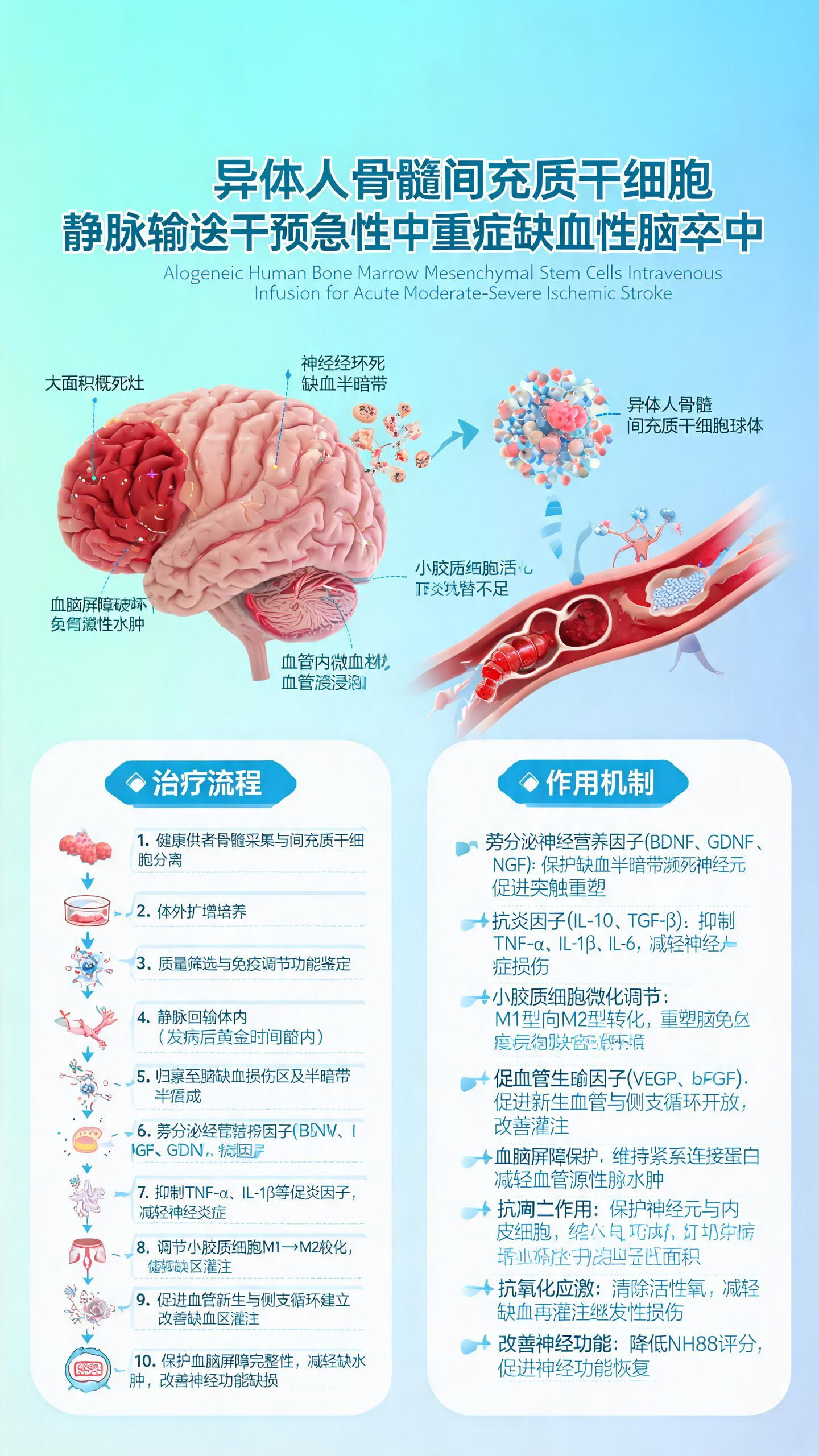
Allogeneic Bone Marrow MSC Intervention for Stroke Infographic AI Image Prompt
An infographic poster with a light blue-green gradient background. On the left is a 3D rendering of allogeneic human bone marrow mesenchymal stem cell spheres and an acute moderate-to-severe ischemic stroke brain tissue model, highlighting pathological states such as large infarct in the middle cerebral artery blood supply area, ischemic penumbra, neuronal necrosis and apoptosis, microglial activation and inflammatory infiltration, blood-brain barrier disruption and vasogenic edema, intravascular microthrombus formation, and insufficient collateral circulation compensation. On the right is a white card-style text layout. Main title: "Allogeneic human bone marrow mesenchymal stem cells intravenous infusion intervention for acute moderate-to-severe ischemic stroke", in both Chinese and English. Below on the left shows a flowchart of the stem cell therapeutic action process, including "Healthy donor bone marrow collection and mesenchymal stem cell isolation — in vitro expansion culture — quality screening and immunomodulatory function identification — intravenous infusion into the body (within the golden time window after onset) — homing to the cerebral ischemic injury area and penumbra — paracrine neurotrophic factors (BDNF, NGF, GDNF, etc.) and anti-inflammatory factors (IL-10, TGF-β, etc.) — inhibiting pro-inflammatory factors such as TNF-α, IL-1β, reducing neuroinflammation — regulating microglial polarization from M1 to M2, promoting neural repair — promoting angiogenesis and collateral circulation establishment, improving ischemic area perfusion — protecting blood-brain barrier integrity, reducing brain edema, improving neurological function deficits" and other step icons and arrows. The right list shows the mechanism of action: "Allogeneic human bone marrow mesenchymal stem cells secrete neurotrophic factors such as BDNF, GDNF, and NGF through paracrine action, protecting dying neurons in the ischemic penumbra, promoting synaptic remodeling and neurological function reconstruction; secrete anti-inflammatory factors such as IL-10 and TGF-β, inhibiting the release of pro-inflammatory factors such as TNF-α, IL-1β, and IL-6, reducing neuroinflammatory damage mediated by excessive microglial activation; regulate microglial polarization from M1 to M2, reshape the brain immune microenvironment, and promote tissue repair; secrete angiogenic factors such as VEGF and bFGF, promoting neovascularization in the ischemic area and opening collateral circulation, improving cerebral perfusion; protect blood-brain barrier tight junction proteins, reduce vasogenic cerebral edema, lower intracranial pressure; anti-apoptotic effects protect neurons and vascular endothelial cells, reducing the area of the infarct core; inhibit oxidative stress, scavenge reactive oxygen species induced by ischemia-reperfusion, reduce secondary damage; improve the National Institutes of Health Stroke Scale (NIHSS) score, promote
Content: Infographic poster with light blue-green gradient; left 3D pathological rendering, right white card text layout; includes title, flowchart, and mechanism list; medical visualization style, side-by-side composition, no camera or aspect ratio specified.
Pros: Clear layered elements and professional medical details for academic infographic generation.
Cons: Overly long description with high information density may lead to a cluttered layout.
Reference image: No obvious reference-image dependency
Source materials are collected from publicly accessible web pages. Contact us if a rights issue needs review. Copyright & Privacy