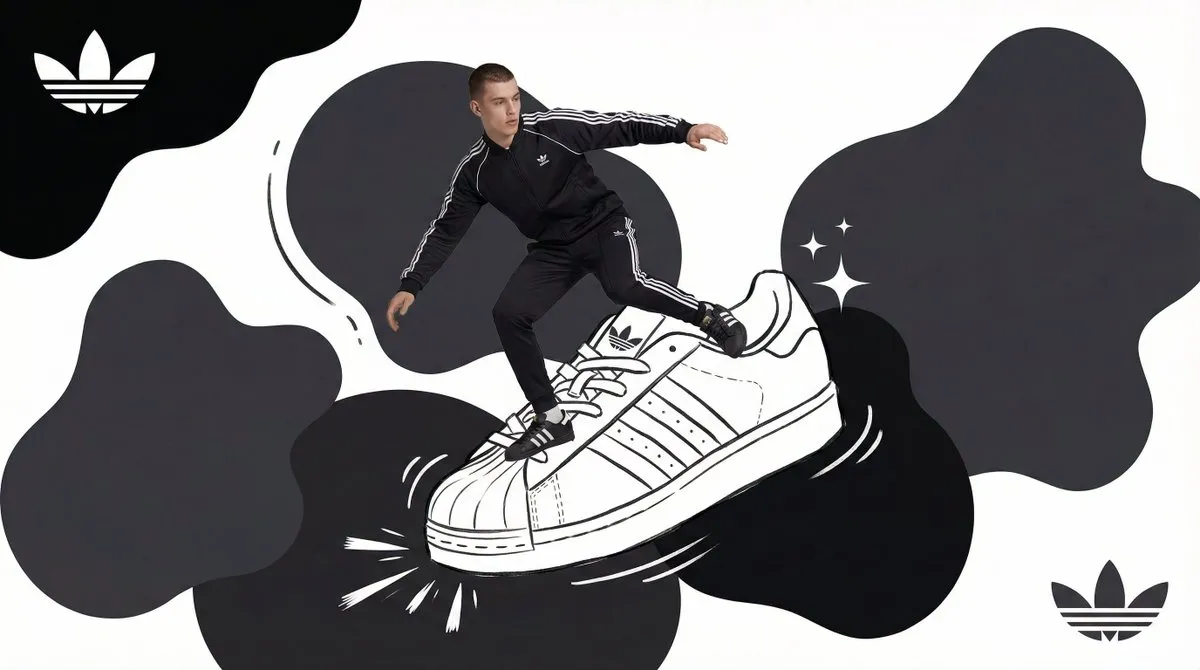
Brand Hero Color Monochrome Mixed Media Interaction AI Image Prompt
Brand: [BRAND NAME] + Hero color: [HERO COLOR] Format: 1:1 square canvas. Base: single flat saturated color [HERO COLOR], no gradients, no texture, pure chromatic field. Overlay: 3-4 organic amoeba blob shapes in the same [HERO COLOR] but 20% darker in value, smooth edges, irregular silhouettes, scattered asymmetrically, some bleeding off-frame. Hand-painted feel, clean execution. Object selection: Choose one iconic physical object from [BRAND NAME] (not animals, not logos), that fans collect, use daily, or photograph, and that defines brand identity. Real, large, tangible object that can physically occupy space next to a person. Interaction: The real model directly interacts with the drawn object physically and directly (hands touching, feet on, body leaning, arms around, wearing/using, standing on, riding/leaning, emerging from). Interaction must be immediately readable, correctly scaled, active not passive. Scene staging: Model: Single model, age 18-26, clean cutout, no fringing. Pose determined by interaction to feel natural and physically believable. Wardrobe: [BRAND NAME]'s most iconic apparel in [HERO COLOR] monochromatic palette. Illustrated object: Pure white (#FFFFFF) flat 2D illustration, brush-pen marker line quality, 3-5px weight, slightly imperfect organic edges, hand-drawn feel. No shading, no gradients, flat white fill only. Scale rule — critical: The object must be at least 40% of canvas height, oversized relative to real-world scale is acceptable and encouraged (e.g., waist-high coffee cup, model-tall sneaker). Large scale for better readability and visual impact. Depth layering — critical: Object on multiple z-layers: parts behind the model, parts in front, model's real hands/feet contact at intersection point, making the scene integrated rather than collaged. Brand stamp: One small [BRAND NAME] logo mark on object's surface, embedded naturally, rendered in [HERO COLOR] darker variant, subtle not dominant. Supporting illustration system: All supporting elements white, flat, brush-pen line style, same visual language as hero object. Logo marks: [BRAND NAME] primary icon in white: large (upper-left corner, ~15% canvas width), medium (opposite corner, ~10% canvas width). Impact markers: 2-3 manga-style exclamation dash clusters near the point of interaction between model and object (grip, landing, touch) to emphasize physical connection. Motion lines: 2-4 curved speed lines radiating from the object or model's most active body part, taper at ends, cross behind and in front of model for depth. Ground effect: At the base: white illustrated ground interaction — sparkle stars, short speed dashes, or object-specific effect (splash if cup, dust clouds if sneaker landing, wheel tracks if skateboard). Ambient squiggles: 1-2 loose organic white lines floating near model's torso, visual rhythm connecting photographic and illustrated layers. Lighting: Studio strobe, high-key, even and clean. 5500K neutral. No dramatic shadows on model. Soft contact shadow at model's feet (opacity 15%). Photography reads as natural and real against graphic illustrated environment. Tech specs: Aesthetic: mixed media — real photograph integrated with hand-drawn 2D illustration. Color count: 3 maximum — [HERO COLOR] light, [HERO COLOR] dark blobs, white illustration. Photography skin tones and fabric colors are only additional color exception. Illustration style: Y2K comic energy, Japanese streetwear magazine, brush marker. Composition: asymmetric and dynamic. The interaction point between model and object is the visual center of gravity — everything else orbits around it. No text, no wordmarks, logo icon only. Mood: the model is not posing with the object — the model is in the middle of using it. Caught mid-action. Alive.
Content: Brand-color solid background + dark blob overlay + real model interacting with drawn object + white supporting illustration system + high-key studio lighting. Structure: subject (model), scene (solid field+blobs), style (mixed-media Y2K), composition (asymmetric dynamic), lighting (high-key no shadows), color (3-color limit), format (1:1 canvas).
Pros: High visual unity centered on brand color and object; clear interaction design ensures strong visual impact.
Cons: Strong dependency on fixed brand elements limits creative freedom; execution requires high precision in separate model, illustration, and interaction layers.
Reference image: No obvious reference-image dependency
Curated from publicly available creative examples. Prompts and commentary are edited and organized by this site. Please contact us with any rights concerns. Copyright & Privacy