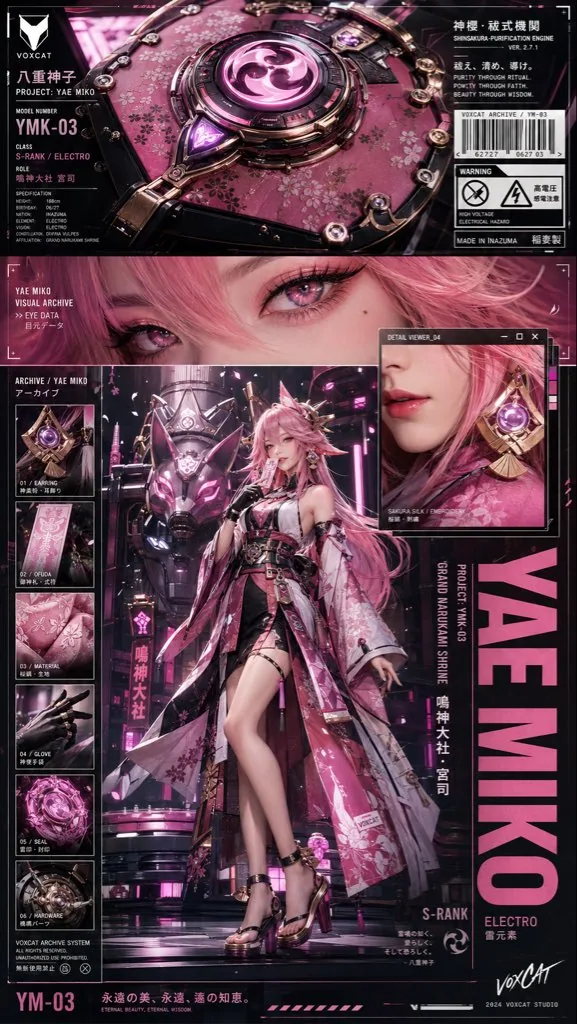
Retro Japanese Street × Future Industrial Tech Poster AI Image Prompt
With [Character / Theme] as the core, create a high-information-density visual poster in the style of Retro Japanese street magazine × Future industrial technology × High-end fashion editorial × Commercial beauty photography. Use a 9:16 vertical composition, based on a strict grid system, combined with irregular collage, cross-layer overlay, partial cropping, floating windows, and interweaving of images and text. The overall vibe is a mix of Japanese trend magazines, future tech archives, luxury ads, and industrial product manuals. The image includes main visuals, close-up details, material details, functional modules, numbered parameters, barcodes, warning symbols, and a small amount of English or Japanese typography, with clear information hierarchy and legible text. At the top, set up a "rational information zone": automatically design close-ups of iconic objects, equipment, vehicles, creatures, buildings, or core devices based on [Character / Theme], presenting complex structures, material textures, signs of use, glowing parts, and industrial details; add corresponding energy cores, functional modules, or thematic symbols alongside, with project codes, technical names, performance parameters, and short slogans. In the middle, set an extremely narrow horizontal "emotional close-up zone": extract the most recognizable visual parts of [Character / Theme], such as eyes, face, hands, masks, weapons, textures, symbols, or core components. Use ultra-close commercial photography to highlight wet reflections, real skin or material textures, light reflections, and intense gazes, making it a visual bridge connecting character emotion and thematic worldview. Add a grid-breaking floating detail window in the middle or slightly to the right, automatically displaying lips, eye makeup, accessories, mechanical parts, clothing textures, weapon details, energy structures, or other visually attractive parts. Use Beauty Macro or Product Macro photography texture to show pores, fibers, metal wear, transparent materials, liquid reflections, or delicate highlights. At the bottom, set the "main visual zone": place [Character] in the foreground in full or three-quarter view, automatically design high-fashion styling based on character settings, incorporating Techwear, uniforms, functional straps, metal fasteners, modular accessories, or themed garment structures. The character has good proportions, clear silhouette, and calm, strong body language, with poses such as slight side stance, one-leg weight, hand in pocket, lightly touching collar, holding a themed prop, or naturally controlling the core device. Behind the character, place a massive subject corresponding to [Theme], such as a heavy mecha, future vehicle, giant creature, industrial installation, architectural structure, weapon system, or symbolic totem. The foreground character partially blocks the rear subject, establishing a clear spatial hierarchy of "character foreground—subject midground—environment background." The background is automatically generated according to the theme, such as a laboratory, hangar, city street, underground facility, photo studio, future factory, or surreal space. On the side of the image, set a vertical archive column, adding multiple partial image modules showcasing the subject's joints, materials, equipment, clothing, functional components, or iconic objects, accompanied by technical parameters, project numbers, material descriptions, function lists, warning labels, barcodes, and publication information. On the right, add a large main title corresponding to [Theme], using bold sans-serif, condensed, or military stencil fonts, with overlapping occlusion with the character and background. Colors are automatically adapted from the core palette of [Character / Theme], selecting a high-saturation primary color throughout titles, lighting, local reflections, makeup highlights, functional icons, and visual symbols, combined with black, cool white, metallic gray, or low-saturation auxiliary colors to form a unified and strong brand identity. The overall look must present photorealistic commercial photography quality, with clear credibility of skin, hair, makeup, fabric, metal, glass, plastic, and environmental materials. Use advanced studio lighting, hard rim light, local colored reflection light, and ambient light; the image is sharp, cool, glamorous, dangerous, and industrially oppressive, like a limited-edition Japanese fashion-tech magazine from the future.
Content: Character/theme-centric structured poster with distinct zones (top detail, mid emotion strip, floating window, bottom hero, side archive), mixing retro Japanese magazine, future tech, fashion editorial, and commercial beauty. Uses strict grid, collage, text overlay; color adapted from theme, emphasizing realistic light and material.
Pros: Clear structural segmentation; complex style fusion with actionable specifics.
Cons: High density may dilute focus; 'auto-adapt' relies on model interpretation.
Reference image: No obvious reference-image dependency
Source materials are collected from publicly accessible web pages. Contact us if a rights issue needs review. Copyright & Privacy